




How Long Do Solar (Home Storage) Batteries Last in Arizona?
 Last updated: Jun 24, 2026
 10 min read


Published: June 24, 2026
Quick answer: Most solar batteries (also called home storage batteries) last 10 to 15 years before they need replacement. On a single charge, a typical battery powers your essential appliances for about 24 hours. Pair your battery with solar panels in Arizona’s sunny climate, and you can keep your home running almost indefinitely.
Arizona homeowners ask us the same question all the time: how long do solar batteries last? It’s a smart question to ask before investing in a solar home battery system. The answer comes in two parts—how long a battery runs on a single charge, and how many years it will serve your home before needing replacement.
Both answers matter, and both work in your favor here in Arizona. With over 300 sunny days a year, the Grand Canyon State is one of the best places in the country to pair a battery with solar panels. This guide breaks down what affects solar battery lifespan, how solar panels extend your backup power, and how three of the top batteries on the market compare.
What is a solar battery, and how does it work?

A solar battery—also known as a home storage battery—stores electricity for use when you need it. During the day, your solar panels generate power. Any energy you don’t use right away gets stored in the battery instead of sent back to the grid. When the sun goes down or the grid fails, your battery delivers that stored power to your home.
The terms “solar battery” and “home storage battery” describe the same product. Both store energy and discharge it on demand, keeping your essentials running through outages and reducing your reliance on the utility company.
How long does a solar battery last on a single charge?
For most homes with a standard battery, a single charge provides roughly a day of backup power for essential loads. According to EnergySage (2025), the average American home uses about 30 kilowatt-hours (kWh) of electricity per day, while most home batteries store between 10 and 20 kWh.
Three factors determine exactly how long your battery lasts on one charge:
- Battery capacity: Measured in kilowatt-hours, this is how much electricity your battery can store. A 13 kWh battery is common—that’s the capacity of the Tesla Powerwall 3.
- Your power usage: Different appliances draw very different amounts of power. A refrigerator uses around 200 watts, while central air conditioning can pull 3,000 watts or more.
- Whether you have solar panels: Solar recharges your battery every day, removing the limit of a single charge.
Here’s a real example. Keep your fridge, LED lights, WiFi router, TV, and phone chargers running—roughly 250 to 300 watts total—and a 13 kWh battery could power them for more than 40 hours. Turn on central air conditioning in a Phoenix summer, and that same battery might drain in just a few hours.
This is why most Arizona homeowners choose which circuits to back up ahead of time. You might prioritize your fridge, lights, internet, and a few outlets while skipping the central AC or electric water heater.
Why solar panels matter for Arizona homes
Pairing a battery with solar panels changes the entire equation. Without solar, you’re rationing a single charge until the grid comes back. With solar, you recharge every day the sun shines.
The cycle is simple. During daylight, your solar panels power your home and recharge your battery at the same time. When the sun sets, you switch to battery power. When the sun rises, your panels top off the battery again. This loop can continue indefinitely—days, weeks, or even months if needed.
Arizona’s climate makes this especially powerful. With abundant year-round sunshine, solar production here is among the highest in the nation. Even after a couple of cloudy days, the sun returns quickly to keep your battery charged and your home running. For Arizonans, pairing solar panels with a home storage battery is the clearest path to genuine energy independence.
What is the lifespan of a solar battery?
Most solar batteries maintain strong performance for 10 to 15 years before they need replacement, according to EnergySage (2025). Your battery doesn’t simply stop working at year 10—it gradually loses capacity over time.
How Does Solar Battery Degradation work?
Battery degradation works like the battery in your phone or laptop. Every charge-and-discharge cycle costs a tiny bit of capacity. Modern lithium iron phosphate (LFP) batteries handle this well, lasting thousands of cycles before capacity drops significantly.
Most manufacturers guarantee their batteries will retain at least 60 to 70% of original capacity after 10 years. So a 13 kWh battery might store about 9 kWh after a decade—enough to power your essentials for around 17 hours instead of 24. When capacity reaches that 60 to 70% threshold, most homeowners decide it’s time to upgrade.
Solar Battery Warranties in Arizona
A note on warranties: Read the fine print. Many warranties include a cycle or throughput limit. If a warranty covers 6,000 cycles over 10 years and you cycle the battery twice a day, you could hit that limit in about 8 years instead of 10.
Comparing solar battery life expectancy: Tesla, Enphase, and FranklinWH
Three of the most popular home storage batteries available to Arizona homeowners are the Tesla Powerwall 3, the Enphase IQ Battery 10C, and the FranklinWH aPower 2. Here’s how they compare.
Tesla Powerwall 3 Solar Batteries
- Usable capacity: 13.5 kWh
- Continuous power: 11.5 kW—enough to run most household circuits at once
- Warranty: 10 years
- Best for: Homeowners who want high power output to run more appliances simultaneously, including larger loads during Arizona’s hot summers.
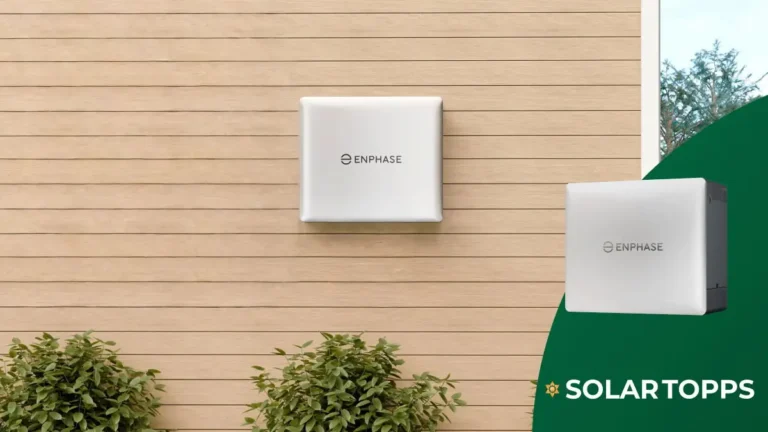
Enphase IQ Battery 10C in Arizona
- Usable capacity: 10 kWh
- Continuous power: 7.08 kW
- Warranty: 15 years
- Best for: Homeowners who value a longer warranty period and a modular system that’s easy to expand as energy needs grow.
FranklinWH aPower 2 and aPower S
- Usable capacity: 15 kWh
- Continuous power: 10 kW
- Warranty: 12 years (or 15 years in some configurations)
- Best for: Homeowners who want the largest single-unit capacity and strong whole-home backup performance. We have the aPower S and aPower 2.
All three use lithium iron phosphate chemistry, which delivers the long cycle life and reliable performance you want from a solar home battery system. Choose the Tesla Powerwall 3 if maximum power output matters most. Choose the Enphase IQ Battery 10C if a longer warranty and modular flexibility are your priorities. Choose the FranklinWH aPower 2 if you want the largest usable capacity in a single unit.
How to get the most from your solar battery in Arizona
Getting the most from your investment comes down to smart planning upfront and good habits over time. Keep these steps in mind:
- Size your system to your real needs. Be honest about what you must run during an outage, then size your battery and solar array accordingly.
- Read the warranty details closely. Compare capacity guarantees and cycle limits, not just the headline number of years.
- Work with an experienced local installer. Proper installation directly affects how well your battery performs over its lifetime.
- Pair your battery with solar panels. In Arizona, this is the single most effective way to extend your backup power and maximize value.
A well-designed system won’t just keep your lights on during the next outage—it gives you confidence that your home stays comfortable and connected no matter what happens with the grid.
Powering your Arizona home for years to come
Solar batteries last 10 to 15 years and deliver about a day of backup on a single charge. But in Arizona, the real advantage comes from pairing your home storage battery with solar panels. With our state’s exceptional sunshine, you can recharge daily and keep your home running through outages of any length.
The right system depends on your power needs, your budget, and the warranty terms that matter most to you. Ready to find the best solar home battery system for your home? Reach out to our Arizona solar specialists for a personalized recommendation and a no-pressure quote.
Frequently asked questions
How long do solar batteries last in Arizona?
Solar batteries last 10 to 15 years before they need replacement. On a single charge, most batteries power essential appliances for about 24 hours. When paired with solar panels in Arizona’s sunny climate, a battery can keep your home powered indefinitely.
How long do Tesla solar batteries last?
The Tesla Powerwall 3 carries a 10-year warranty and is expected to last 10 to 15 years. It offers 13.5 kWh of usable capacity and 11.5 kW of continuous power, making it strong enough to run most household circuits at once.
Do solar panels make my battery last longer?
Yes. Solar panels recharge your battery every day the sun shines, so you’re no longer limited to a single charge. In Arizona, with over 300 sunny days a year, this means your battery can power your home through extended outages that last days or even weeks.
What is a 12V solar battery, and is it right for my home?
A 12V solar battery is a smaller unit often used for RVs, off-grid cabins, and small-scale solar setups. For powering a whole home, you’ll want a high-capacity home storage battery like the Tesla Powerwall 3, Enphase IQ Battery 10C, or FranklinWH aPower 2 instead.
What shortens a solar battery’s lifespan?
Frequent deep cycling, extreme heat, and exceeding your warranty’s cycle limit can all shorten a solar battery’s life. Modern lithium iron phosphate batteries handle Arizona heat well, but proper installation and good system sizing help maximize lifespan.


