




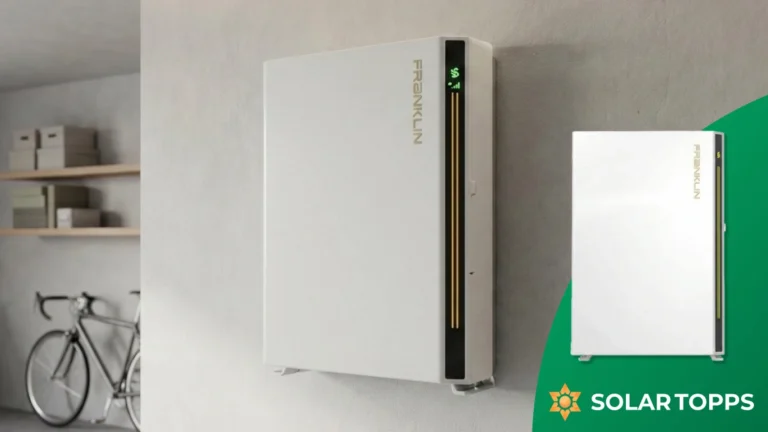
We Now Offer FrankinWH aPower S & aPower 2 Home Storage Batteries!
 Last updated: Jun 02, 2026
 8 min read


Published: May 28, 2026
Quick answer: Solar Topps now installs FranklinWH home storage batteries, including the aPower S and aPower 2 models. These batteries offer superior lithium iron phosphate chemistry and smart energy management, making them a robust, efficient choice for Phoenix homeowners when compared to the Tesla Powerwall 3 and Enphase IQ10C.
Phoenix homeowners know the struggle: extreme heat and an unreliable grid make a dependable solar backup system essential. At Solar Topps, we take extreme ownership by offering only the most rigorously engineered, high-performance equipment available.
That’s why we’re proud to announce our partnership with FranklinWH, an industry leader in whole-home backup. By adding the aPower S and aPower2 batteries to our lineup, we’re providing more premium, locally supported energy solutions to Arizona.
This guide will break down the FranklinWH specs, compare them to competitors like the Tesla Powerwall 3, and help you select the ideal system for your home.

What are the specifications of the FranklinWH aPower S and aPower2?
FranklinWH home storage batteries utilize Lithium Iron Phosphate (LFP) chemistry. According to battery industry safety standards [UL 9540A, 2023], LFP chemistry is inherently more stable and less prone to thermal runaway than traditional nickel manganese cobalt (NMC) batteries. This makes Franklin storage batteries exceptionally well-suited for the intense heat of the Phoenix-Metro region.
The aPower S home storage battery
The aPower S battery is a high-capacity unit designed for robust energy storage and seamless integration with existing solar systems.
- Usable Capacity: 13.6 kilowatt-hours (kWh) per unit.
- Continuous Power: 5 kilowatts (kW).
- Peak Power: 10 kW for 10 seconds, allowing for the startup of heavy loads like air conditioning units.
- Chemistry: Lithium Iron Phosphate (LFP).
- Integration: Pairs with the FranklinWH aGate smart energy management panel, which automatically shifts your home off the grid during an outage.
The aPower2 home storage battery
The aPower2 battery builds upon the foundation of the aPower S, offering enhanced software controls and improved installation efficiency for complex home energy setups.
- Usable Capacity: 13.6 kWh per unit.
- Scalability: Homeowners can stack up to 15 aPower2 batteries per aGate controller, delivering unparalleled scalability for large residential properties.
- Black Start Capability: If the battery depletes entirely during a prolonged grid outage, the aPower2 can autonomously restart using solar energy once the sun rises.
- Generator Integration: The aGate seamlessly integrates with standby generators, providing a secondary backup layer.
How do FranklinWH batteries compare to the Tesla Powerwall 3 and Enphase IQ10C?
When evaluating solar batteries in Phoenix, homeowners frequently ask how FranklinWH compares to legacy brands. The Tesla Powerwall 3 and Enphase IQ10C are strong competitors, but FranklinWH offers specific advantages depending on your home’s energy profile.
Tesla Powerwall 3 vs. FranklinWH
The Tesla Powerwall 3 includes a built-in solar inverter and offers 13.5 kWh of capacity. It is an excellent choice for homeowners installing a brand-new solar system who want an all-in-one hardware footprint.
However, choose the FranklinWH aPowerS home storage battery if you already have an existing solar system (AC-coupled) or if you require advanced generator integration. The FranklinWH aGate smart panel provides more granular control over heavy loads without requiring a separate smart electrical panel upgrade.
Enphase IQ10C vs. FranklinWH
The Enphase IQ10C provides 10.08 kWh of usable capacity and features a modular microinverter architecture. It is highly reliable and integrates perfectly if you are already using Enphase solar microinverters.
Choose the FranklinWH aPower2 home storage battery if you need higher capacity per unit and a more robust peak power output. FranklinWH delivers 13.6 kWh compared to Enphase’s 10.08 kWh, and Franklin’s 10 kW peak power is better equipped to handle the heavy startup surge of Phoenix air conditioning compressors.
Which solar battery is the best option for Phoenix-Metro residents?
The optimal choice depends strictly on your home’s specific energy demands, your current electrical panel, and your backup goals.
- Choose FranklinWH if you want maximum capacity per unit, advanced smart panel capabilities without replacing your main electrical panel, and seamless integration with a standby generator. The robust LFP chemistry of the aPower S batteries and aPower2 batteries ensures longevity during brutal Arizona summers.
- Choose Tesla Powerwall 3 if you are installing a new, combined solar-and-storage system and prefer a streamlined, single-inverter ecosystem.
- Choose Enphase IQ10C if you have a smaller energy footprint, prefer modular battery sizing, and are heavily invested in the Enphase microinverter ecosystem.
At Solar Topps, we aren’t just salespeople; we are a highly accredited construction engineering firm. We design, install, and service systems precisely engineered to deliver premium results. We will analyze your utility bills, inspect your electrical panel, and recommend the exact battery configuration that provides the best value and protection for your home.
Choose FranklinWH and Solar Topps – a Winning Home Battery Storage Combination!
A reliable solar battery backup system transforms your solar panels from a simple utility offset into a resilient microgrid. With the addition of FranklinWH home storage batteries to our product lineup, Solar Topps continues our commitment to providing better products and better service, always for a lower price.
If you are ready to secure your home against grid outages and rising utility rates, our engineering team is ready to design a custom solution for you. Contact Solar Topps today to schedule a comprehensive energy consultation and discover why thousands of Arizonans trust us for their solar and battery backup needs.
Frequently Asked Questions (FAQ)
What is the lifespan of FranklinWH home storage batteries?
FranklinWH offers a 12-year standard warranty on both the aPower S and aPower2 home storage batteries. Based on LFP chemistry degradation curves, these batteries are engineered to retain at least 70% of their original capacity at the end of the warranty period under normal daily cycling.
How much does it cost to install Franklin storage batteries in Phoenix?
The total cost of installation varies depending on the number of batteries required, the complexity of the electrical integration, and local permitting fees. However, installing an aPowerS or aPower2 system typically ranges between $12,000 and $16,000 per unit.
Can I add a FranklinWH battery to an existing solar panel system?
Yes. FranklinWH batteries are AC-coupled, meaning they can be retrofitted to function seamlessly with almost any existing solar panel system, regardless of the original inverter manufacturer.
How long will a single aPower2 battery power my home during an outage?
A single aPower2 battery provides 13.6 kWh of storage. For an average Phoenix home, this is sufficient to power essential loads (refrigerator, lights, Wi-Fi, and basic outlets) for 12 to 24 hours. Running a central air conditioner will deplete a single battery much faster, which is why Solar Topps often recommends multiple units for whole-home backup.


