




How Solar Energy Works: A Step by Step Guide for AZ Homeowners
 Last updated: Aug 10, 2026
 9 min read


Updated: May 19, 2026
Harnessing the sun to power your daily life is one of the smartest investments you can make for your property. Every day, the Earth receives enough sunlight to easily cover global energy demands. Converting that abundant resource into usable electricity provides homeowners with lower utility bills, reduced carbon emissions, and reliable energy independence.
Understanding the mechanics behind this technology helps you make informed decisions about your property. Many Phoenix Area homeowners ask us, How does solar energy work? The process involves a highly coordinated system of advanced components operating seamlessly together. From the moment sunlight hits your roof to the second you plug in your electric vehicle, each part of the system plays a critical role.
This guide breaks down exactly how solar energy is generated and distributed throughout your home. We will walk you through the entire process step by step, explaining the function of solar panels, inverters, batteries, and charging stations. You will also learn how our locally owned, all-in-one solar company engineers and installs these systems to deliver premium results for Arizona homeowners.
Request a Solar Energy Quote Today!
What is solar power?
Before examining the individual components, it helps to answer a fundamental question: what is solar power? Solar power is the conversion of renewable solar radiation into electricity. This occurs through a process called the photovoltaic effect. When sunlight interacts with specific semiconductive materials, it generates an electrical current. For decades, engineers have refined this technology to make solar power for residential properties highly efficient and accessible.
Step 1: Solar Panels Capture Sunlight
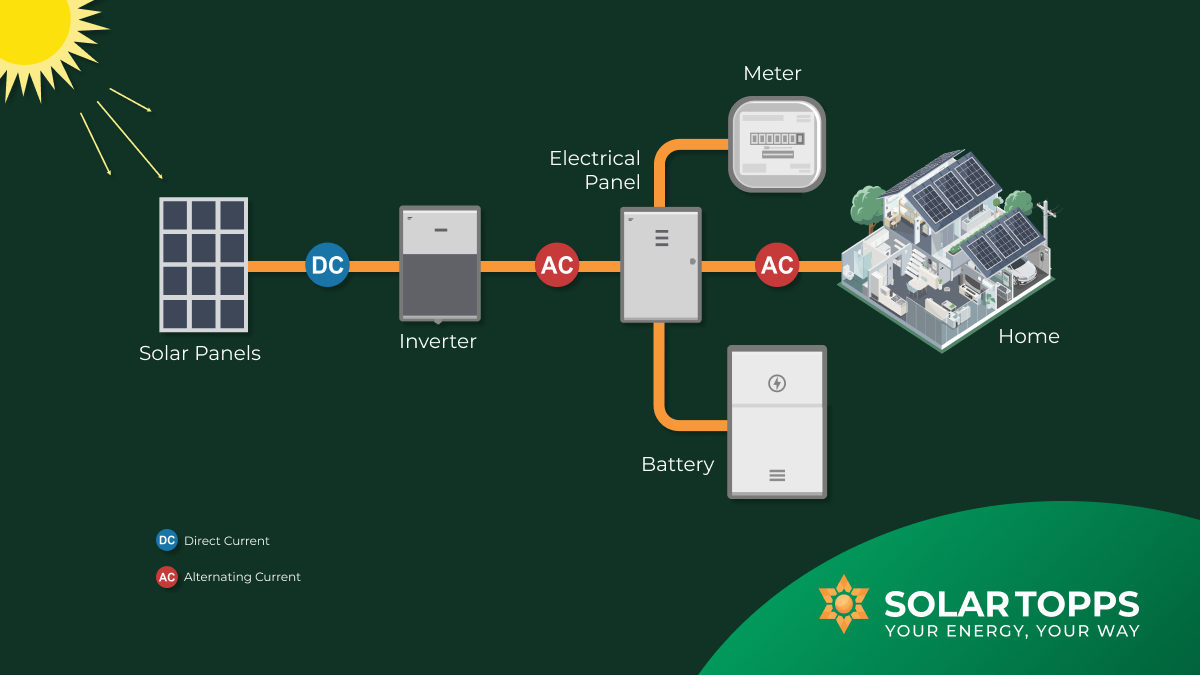
The process begins on your roof. Solar panels are built using semiconductive materials, typically monocrystalline or polycrystalline silicon. When sunlight hits the thin layer of silicon, it knocks electrons loose from their atoms. These negatively charged electrons are drawn toward the positively charged side of the cell, creating a direct current (DC).
The amount of electricity your panels generate depends on several factors, including roof orientation, geographic location, and local shading. At Solar Topps, our engineering-focused approach ensures your system is designed for maximum performance. We carefully evaluate your home and energy usage to position your panels for optimal sun exposure, ensuring your system produces more and lasts longer.
Step 2: Inverters Convert DC to AC
While solar panels generate DC electricity, your home appliances and wiring rely on alternating current (AC). Solar energy: how does it work inside the house? You need a device to bridge this gap. This is where the solar inverter comes in.
The inverter takes the DC electricity produced by your panels and converts it into usable AC electricity. Depending on your system’s specific design, you might use a single central string inverter or multiple microinverters attached to individual panels. Inverters also serve as the communication hub of your system, tracking your energy production and allowing you to monitor your system’s performance through a mobile app.
Step 3: The Electrical Panel Distributes Electricity
Once the electricity is converted to AC, it travels to your home’s electrical panel, often called a breaker box. The electrical panel distributes the newly generated solar electricity to your home’s various circuits. It powers your lights, refrigerator, air conditioning, and electronics safely and efficiently.
If your solar panels generate more electricity than your home is currently using, the excess power flows out of the electrical panel and back into the utility grid. Your electric meter records this exchange. Through a billing mechanism called net metering, many utility companies provide credits for this surplus energy, which helps offset the cost of power you might need to pull from the grid at night.
Step 4: Solar Batteries Store Excess Energy
For true energy independence, battery backup systems are an essential component. Instead of sending all your surplus power back to the grid, a solar battery stores it for later use. This means you have reliable power available when the sun goes down, on cloudy days, or during a grid outage.
Solar Topps has successfully integrated over 1,200 battery backup systems, including advanced options like the Tesla Powerwall. Having a battery integrated into your system provides peace of mind and further reduces your reliance on traditional utility companies.
Step 5: EV Chargers Power Your Drive
As electric vehicles become increasingly popular, integrating a solar power charger into your home energy system is a logical next step. An EV charger pulls the clean, renewable electricity generated by your solar panels and uses it to charge your car’s battery.
Driving an electric vehicle charged by solar power maximizes your savings and minimizes your carbon footprint. You essentially fuel your vehicle with sunshine. Our technicians can seamlessly integrate an EV charger with your solar and battery setup, creating a comprehensive home energy ecosystem.
The Solar Topps Difference is based in Arizona
Since 2009, Solar Topps has operated as Arizona’s premier solar and battery installer. We hold ourselves to a standard of extreme ownership, meaning we take full accountability for every aspect of your solar journey. We are not just salespeople who decided to enter the industry; we are a highly accredited construction engineering firm.
When you choose Solar Topps, you get a fully integrated solar provider. Every part of our operation is handled in-house. Your system will be installed exclusively by highly trained, in-house professionals—never subcontractors. We stock all materials locally to ensure quick installations and rapid service responses. Our unwavering integrity and customer-centric focus have allowed us to help 25,000 homeowners successfully make the switch to solar.
Take the Next Step Toward Energy Independence
Upgrading your home with a customized solar energy system requires a trusted partner who understands the technology and local permitting processes. A properly engineered system will lower your bills, protect you from rising energy costs, and increase your property value.
If you are ready to see exactly how solar can benefit your specific property, reach out to our team of experts. Request a residential quote from Solar Topps today and discover the smartest way to go solar.


