




Projects: The Fagerlie Family
 Posted Sep 17, 2021


Peoria, AZ Residential Solar Installation – The Fagerlie Family
Solar Topps engineered a custom residential solar array installation for the Fagerlie family in Peoria, AZ, optimizing production across their roof and navigating local APS/SRP interconnection rules.
Thinking About Solar in Peoria?
Talk to Solar Topps about a custom home design for your property. Our team tailors every system to your energy needs, roof or facility layout, and budget.
About the Installation
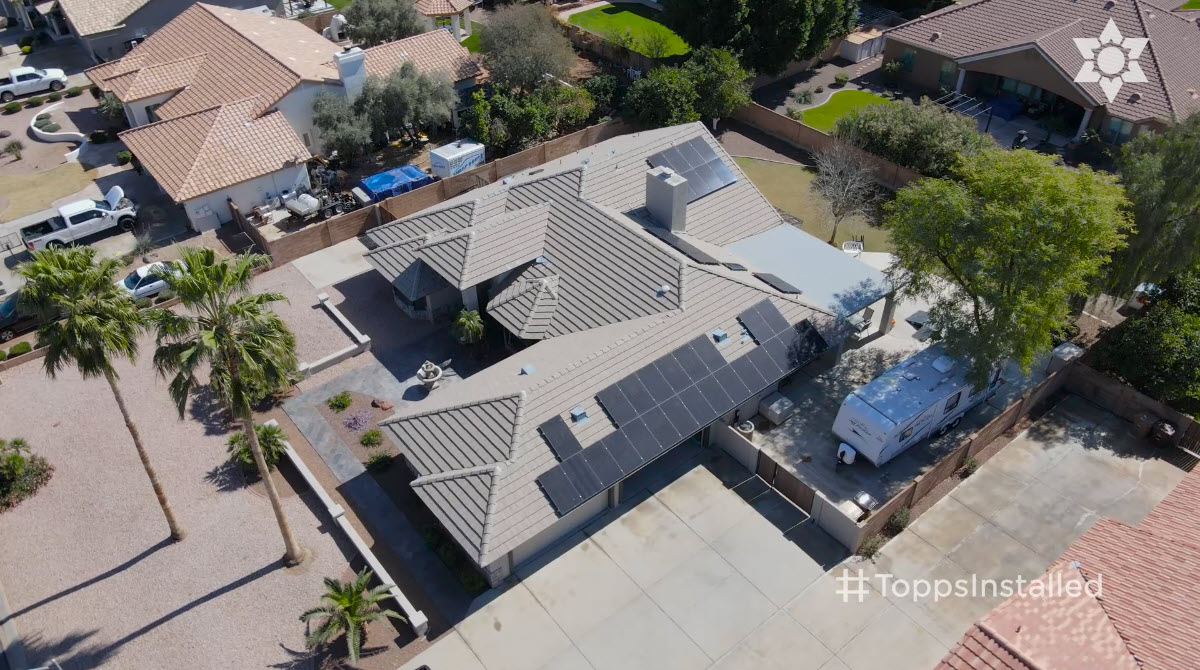
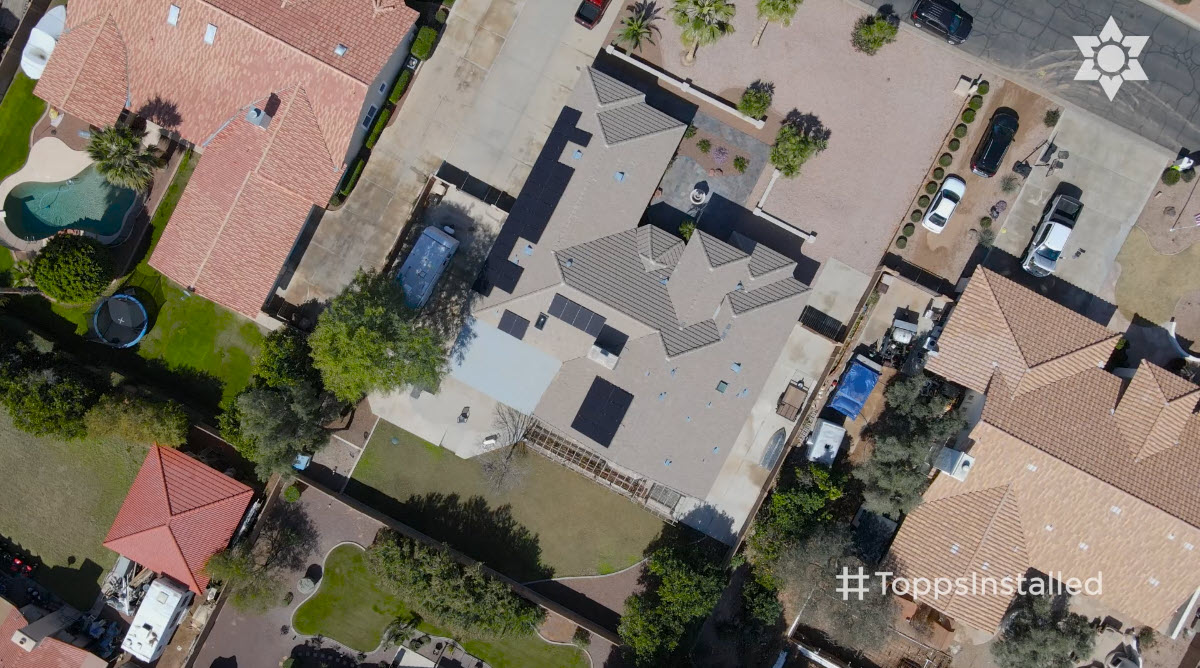
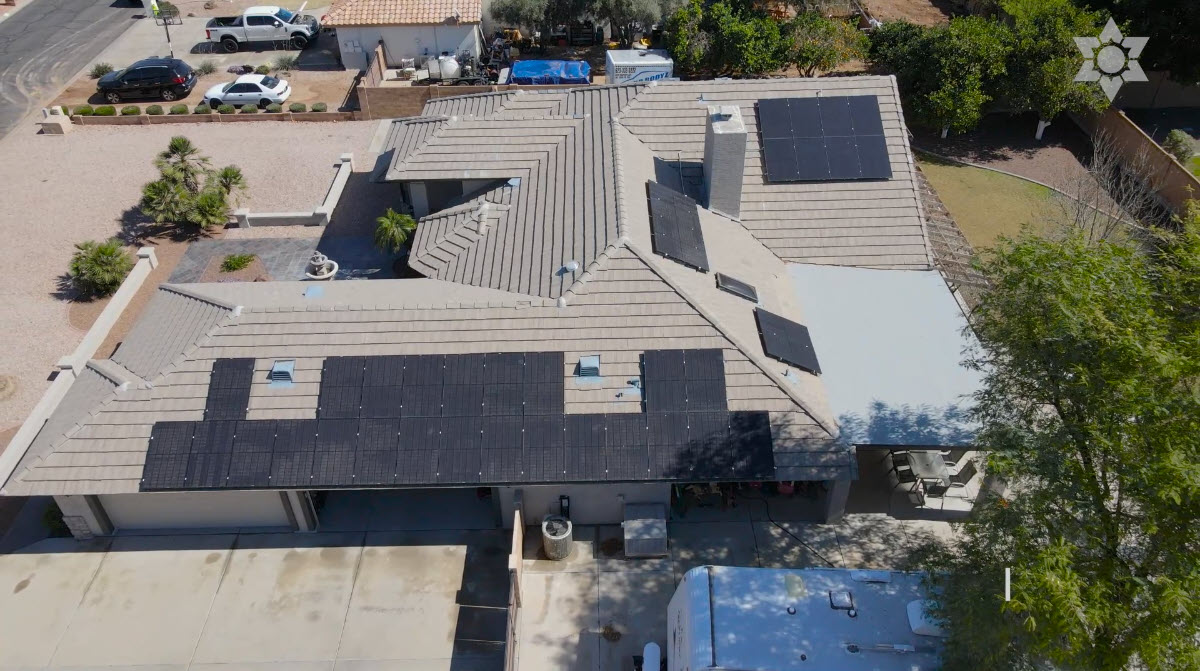
This home spans roughly 3,035 square feet and houses a family of 4. Prior to going solar, their monthly energy bill averaged around $327, motivating them to seek a cleaner and more predictable energy solution. The Solar Topps team engineered a system that uses 38 panels, designed to offset approximately 114% of their annual electricity consumption and deliver an estimated $131,367 in savings over 25 years. Panels were distributed across multiple roof planes to capture sun throughout the day while respecting shade, setback, and aesthetic considerations.
38 solar panels arranged on multiple roof facets. By carefully selecting module orientation, tilt and spacing, the team ensured optimal production during peak sunlight hours. Inverter placement and electrical distribution were planned to minimize voltage drop and comply with the National Electrical Code. The result is a system that blends into the property while delivering clean power year-round.
Why Residential Solar Installation in Peoria?
Peoria lies within the sun-soaked Phoenix metropolitan area, enjoying over 330 days of sunshine each year and ranking among the sunniest regions in the United States. Studies place Phoenix and Tucson at the top of national charts, with an estimated 85% of possible sunshine on average. This extraordinary solar resource means that properly designed PV systems here achieve high capacity factors, making investments in rooftop solar particularly attractive.
Beyond climate, regulatory frameworks support solar adoption. Arizona’s major utilities—Arizona Public Service (APS) and Salt River Project (SRP)—offer net-billing or export credit arrangements, allowing customers to earn credits when excess energy is returned to the grid. Residents and businesses in Peoria will typically fall under one of these service territories. Choosing a rate plan that matches consumption patterns (for example, time-of-use or demand-based structures) is key to maximizing value.
Permitting has also become more streamlined. Many jurisdictions in the Valley participate in the SolarAPP+ program for qualifying residential solar installation projects, expediting code compliance and reducing plan review times. For commercial projects, local building departments provide clear checklists covering structural considerations, electrical one-lines, and equipment specifications. Combined with abundant sunshine and supportive policies, these factors explain why solar adoption across Maricopa County has accelerated in recent years.
Expected Performance & Homeowner Benefits
This system is modeled to offset around 114% of annual energy needs, dramatically reducing dependence on utility-supplied electricity and providing long-term cost stability. By locking in a portion of their energy production for decades, the fagerlie family can hedge against future rate increases and take advantage of net-billing credits. The estimated 25-year savings of $131,367 are based on conservative assumptions about inflation and system degradation.
Operationally, the solar array performs best during daylight hours—coinciding with peak loads driven by air conditioning and daytime occupancy. Smart meter data and system monitoring allow for further optimization, such as shifting high-energy tasks to periods when solar production is strongest. For businesses, the benefits extend beyond electric bill savings: on-site generation helps mitigate demand charges, contributes to sustainability goals, and can enhance property value.
FAQ: Going Solar in Peoria
How do APS and SRP handle solar buyback/net billing?
APS offers renewable purchase riders that credit customers for exported energy at a fixed rate per kWh. SRP provides solar-specific price plans with options that may include demand or time-of-use elements. It’s important to review current tariffs on each utility’s website when sizing and selecting equipment.
What permits are typically required?
Residential solar installation projects may qualify for SolarAPP+, which automates compliance review. Otherwise, building departments require structural calculations, a single-line diagram, equipment listings, and site plans. Commercial projects typically demand more detailed documentation, including structural engineering stamps and fire access considerations. Your installer will coordinate permit submission and inspections.
How long does installation usually take?
Project timelines vary based on jurisdiction and scope. Residential installs can move from contract to commissioning in a matter of weeks when SolarAPP+ is applicable, though utility interconnection approval may add time. Commercial projects involve additional design and structural reviews; expect several months from initial design through final inspection.
-

Home Sq. Ft.
3,035
-

Family Size
4
-

Monthly Bill Before Solar
$ 327
-
Panels Installed
38
-

Utility Bill Offset
114 %
-

Est. 25 Yr Savings
$ 131,367


